The dances
Ghoomar and Kalbelia: the Rajasthani folk dances behind a village evening
A circle of veiled twirlers and a serpent dance of the Thar Desert: where each comes from, what the costumes say and how to watch them.
Reserve my evening ↗Quick answer
The two Rajasthani folk dances you are most likely to meet at an evening like this are ghoomar, a twirling circle dance by veiled women in wide skirts, and Kalbelia, the serpent-like dance of a snake-charming desert community that UNESCO listed in 2010. The booking page names folk dances but no particular ones, so this guide describes the traditions and not a promised programme.
Ghoomar: the circle and the veil
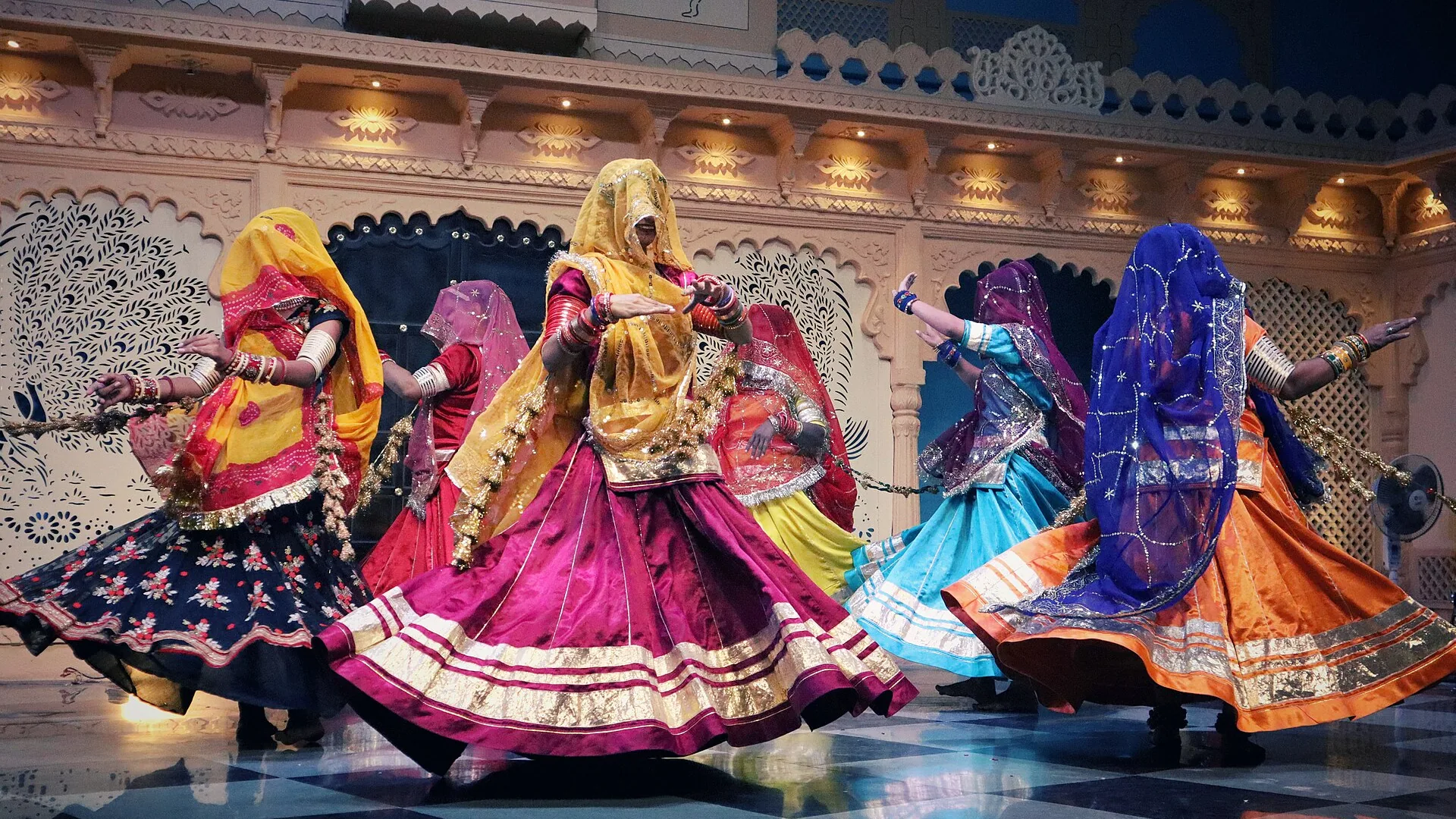
Wikipedia calls ghoomar a traditional folk dance of Rajasthan, performed chiefly by veiled women in flowing skirts called ghaghara. The dancers pirouette while moving in and out of a wide circle, and the word comes from ghoomna, the twirling movement itself. Wikipedia says the Bhil tribe first performed it to worship the goddess Saraswati, and that it was later embraced by Rajput communities, with Rajput elite women eventually joining in. Women dance with a ghoonghat, a veil drawn over the face, and the style and dress shift a little from region to region: faster beats in the areas near Gujarat, slower ones elsewhere.
A dance for welcomes and weddings
Wikipedia reports that, by tradition, a newly married bride is expected to dance ghoomar when welcomed to her marital home, and that it is performed at weddings, festivals and religious occasions, sometimes for hours. That explains why it lights up a celebratory evening. Its songs include Gorband and Mor Bole Re, often centred on royal legends or traditions. Wikipedia also notes that a ghoomar academy was founded in 1986 by Maharani Rajmata Goverdhan Kumari of Santrampur, who received the Padma Shri in 2007 for her work in the arts.
Kalbelia: a dance that moves like a snake
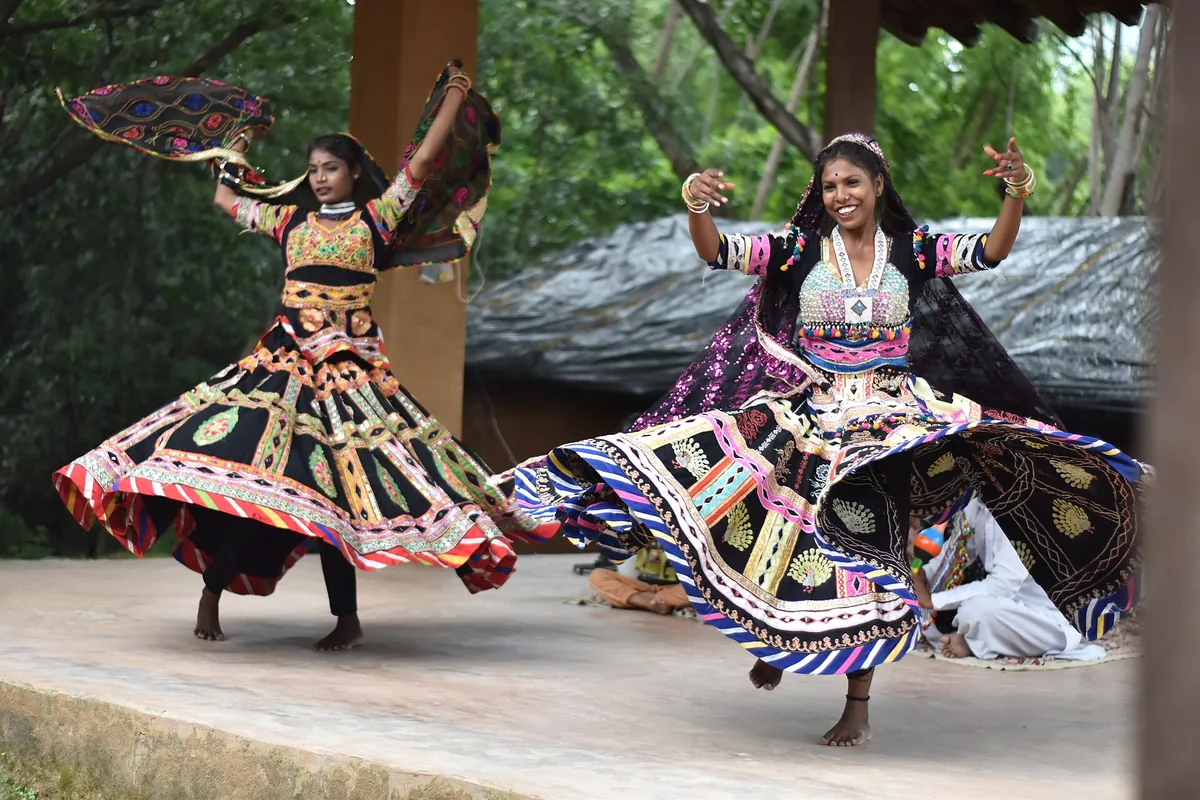
The Kalbelia are a snake-charming community of the Thar Desert, says Wikipedia, and dance is central to their culture. Its dancers are women in flowing black skirts who dance and twirl in imitation of a serpent, wearing red and black embroidered clothes with small mirrors and silver thread. Men play instruments such as the pungi, a woodwind used to catch snakes, along with the dufli, khanjari and dholak, and as the performance goes on the rhythm and the dance both quicken. Songs draw on folklore and mythology, and Kalbelia performers are known for improvising lyrics.
Why UNESCO lists it
In 2010 the Kalbelia folk songs and dances of Rajasthan were placed on UNESCO's Intangible Cultural Heritage list, Wikipedia records. It adds a poignant detail: since a wildlife law of 1972 the Kalbelia have been pushed out of their traditional work with snakes, and performing arts have become a major source of income, with opportunities that depend on seasonal tourism. When you watch a Kalbelia dance, you are watching a living tradition that adapted to change, and the dancers are often members of the community itself.
How to watch
Neither dance needs prior knowledge. For ghoomar, watch the circle: dancers move in and out while spinning, and the skirts flare as they turn. For Kalbelia, watch the tempo, because it accelerates as the music does, and the bends and sways echo a snake. The booking names folk dances, puppet shows and magic shows without a running order, so see what the village offers on your night. Applaud when the room does, and remember that the performers are working artists.
Frequently asked questions
Is ghoomar guaranteed?
The page names folk dances but no individual ones, so it cannot promise a particular dance.
Why do the dancers wear veils?
Wikipedia says ghoomar dancers dance with a ghoonghat, a veil, which is part of the traditional costume.
Is Kalbelia really UNESCO-listed?
Wikipedia says Kalbelia songs and dances joined UNESCO's Intangible Heritage list in 2010.
Sources